Taking responsibility – for people and decisions
Leadership is demanding, especially in times of change and uncertainty. It means responsibility: for employees, for decisions, and for the direction in which we develop as a company.
But how can managers fulfill this task? At Schubert, we rely on several pillars:
- Management seminars: Based on our leadership principles, we offer practical training courses that support our managers in their daily responsibilities. These courses not only cover management topics, but also promote exchange among participants and the expansion of their own networks.
- Employee appraisals: Employee appraisals are an important management tool and take place at regular intervals between the respective manager and employee. These personal meetings offer the opportunity to give open and honest feedback, identify development opportunities, and create perspectives together.
- Intranet – Management Area: As a central reference work, our intranet provides a platform where new information, defined processes, and important documents for management work are regularly made available.
- Management Newsletter: With our newsletter, we provide our managers with regular, targeted information about innovations and current developments within the company. This ensures that they are always up to date.
In this way, we empower our management team not only to take on responsibility, but also to fulfill it effectively, humanely, and with a view to the future.
Leadership Day – a strong foundation
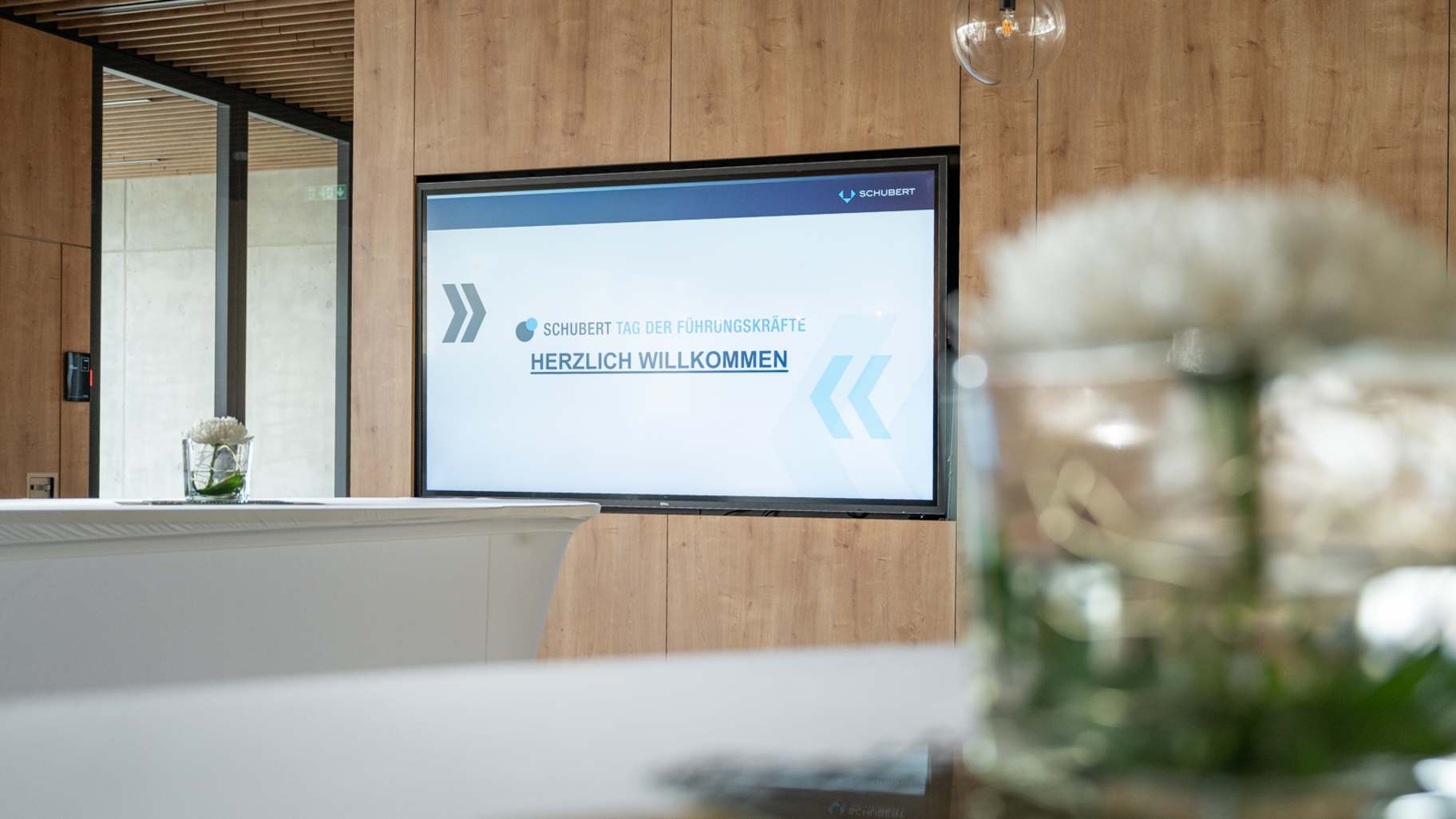
A core element of our personnel development strategy is the Leadership Day. On this day, all managers from across the Schubert Group come together in Crailsheim. The aim is to create time and space for development: to exchange experiences, gain new inspiration, and strengthen a shared understanding of what leadership means at Schubert.
We are proud of this dedicated team, which carries our vision of a more sustainable packaging world into the future every day.

Trust instead of control – a new approach to leadership
A key aspect of our understanding of leadership is the shift from control to trust. We are convinced that creativity, innovation, and motivation can only flourish when managers trust their teams to act independently. Trust creates freedom - and it is precisely this freedom that makes us strong as a company.
This is evident, for example, in the fact that not only experienced professionals, but also interns and students are allowed to take on responsibility from the very beginning – for example, in projects or in their own sub-tasks. Every day, we see how trust works independently of position and empowers people to surpass themselves.
Principles of our leadership
The principles of leadership at Schubert provide our managers with guidance in their daily activities. They form the basis for professional, motivating, and humane leadership behavior—and demonstrate what we stand for as a family business.
- Be a role model: We demonstrate enthusiasm for our tasks, adhere to our values, and thus provide guidance.
- Appreciation & respect: We treat our employees openly, honestly, and respectfully. For us, trust is the basis of all cooperation.
- Health & balance: We pay attention to safety, health, and the compatibility of work and family life.
- Transparency & communication: We share relevant information clearly and promptly, give feedback, and promote open dialogue.
- Promotion & development: We support our employees in developing their strengths and realizing their potential.
- Innovation & change: We create space for ideas, actively drive change, and delegate responsibility.
- Team spirit & enjoyment: We see ourselves as part of our teams—collaboration, freedom, and enjoyment at work are important to us.
These principles are more than just words: they shape our everyday lives, our interactions, and the way we at Schubert work together to shape the future. A positive corporate culture stems from good leadership—we know this and live by it. That is why we have set out our binding leadership principles. They show what guides us and, at the same time, make it clear how we measure ourselves. You can download our guidelines here.