


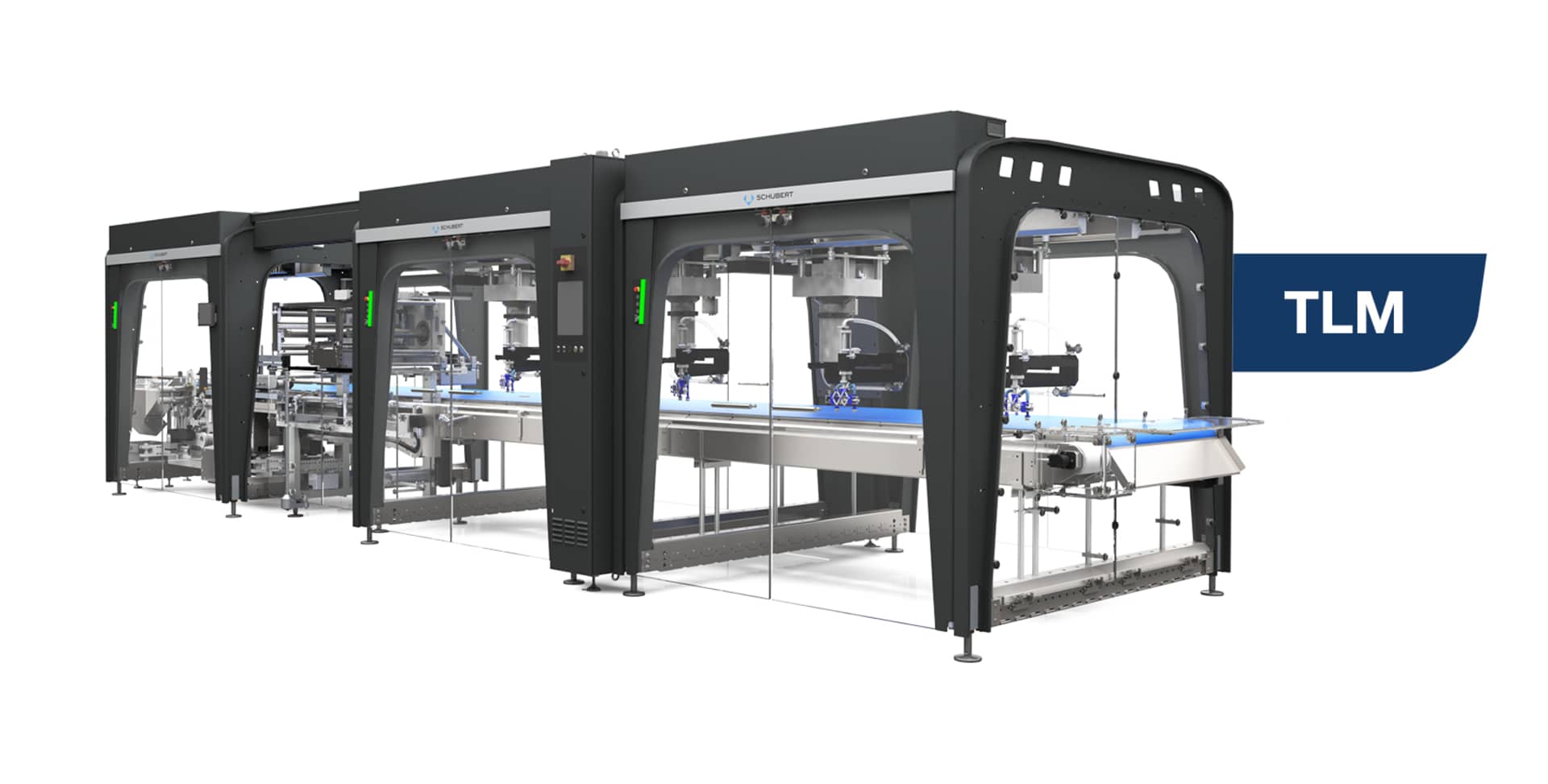
TLM is Schubert´s
modular top-loading machine system for demanding
packaging processes.
The product line is used wherever flexibility in products, formats, and processes is required. TLM is ideal for highly complex applications, such as those involving a wide variety of variants, special packaging shapes, or integrated additional processes such as filling, thermoforming, or pharmaceutical applications. Thanks to its modular design based on the Schubert modular system
and individual robot tools, the TLM series enables highly adaptable and scalable automation that can be precisely tailored to individual requirements. TLM is the right choice for companies that want to efficiently automate complex packaging tasks and rely on a future-proof solution.
New machine generation:
A technological leap forward for TLM
Higher output in the same footprint is one of the key requirements for modern packaging systems. With the new generation of our TLM technology, launched at interpack 2026, we are addressing this requirement and taking it to a new level.
Higher integration density, higher output
A revised machine and control architecture increases integration density within the machine. The result: higher output while providing better access to the components. This is made possible by a more rigid machine frame, new pick-and-place tools and the switch to the EtherCAT standard for device communication. This allows more functions and units to be accommodated in the same space, complemented by a modular scanner system.
Advantages in terms of performance, footprint and scalability
To achieve this technological leap, we devoted all our development resources to the new machine generation in 2025. At its heart is a new control-cabinet-free drive system with servo motors integrated directly into the machine structure. Developed jointly with specialists from Bosch Rexroth over a period of three years, it offers our customers clear advantages in terms of performance, footprint and scalability.
Energy efficiency as a guiding principle
The new drive system distributes excess energy even more efficiently: when a robot decelerates, regenerative braking feeds the braking energy into the shared DC link, where it can be used by other components – without the energy losses associated with conversion between direct and alternating current. This is complemented by passive air cooling with virtually zero energy consumption. The new generation therefore contributes directly to our Mission Blue sustainability programme and reduces the CO_2 footprint of the entire system.
In a dynamic packaging market that continually demands diverse formats and an increasing array of sustainable packaging solutions, flexibility is paramount for manufacturers. Recognising this, Schubert’s packaging machineries are imbued with inherent flexibility.
The modular design of a Schubert packaging machine ensures adaptability, allowing her to process both conventional and new packaging materials within the same line. This flexibility, coupled with the capability to modify or replace any module in each setup, renders our packaging machines a secure and sustainable investment.

