02.06.2026

/

Gerhard Schubert GmbH

A compact, high-tech filling line for natural cosmetics

The Schubert TLM Power Compact line

A unique result can be achieved when natural ingredients, high-quality craftsmanship and state-of-the-art technology come together in perfect balance. This is precisely what natural cosmetics manufacturer ANNEMARIE BÖRLIND was keen to accomplish – finding the answer in its collaboration with Gerhard Schubert. Together, they developed a filling solution that combines the highest standards of quality, precision and efficiency.

When you enter Börlind’s headquarters in Calw in the South of Germany, you immediately sense how deeply rooted the family business is in its heritage and values. A golden linden leaf set into the light marble floor and real linden trees reaching up to the roof of the building reflect the company’s connection to its roots. In 1959, Annemarie Lindner founded the company together with her husband Walter and her then business partner Hermann Börner. The brand and company name, formed from both family names, has from then on represented what sets Börlind apart: naturalness, quality and innovative strength.


Maintaining such a high standard over decades is no easy task, especially as demand for the gradually expanding range of skincare products grew steadily. By 2016 at the latest, following the development of two lipo- and hydro-extracts derived from Black Forest rose stem cells, the management team – already supported by the third generation with siblings Alicia and Nicolas Lindner – had begun searching for a new, more efficient filling line.

A golden linden leaf on the ground in front of the building.

The linden leaf has been the trademark of “ANNEMARIE BÖRLIND Natural Skincare” since the mid-1960s.
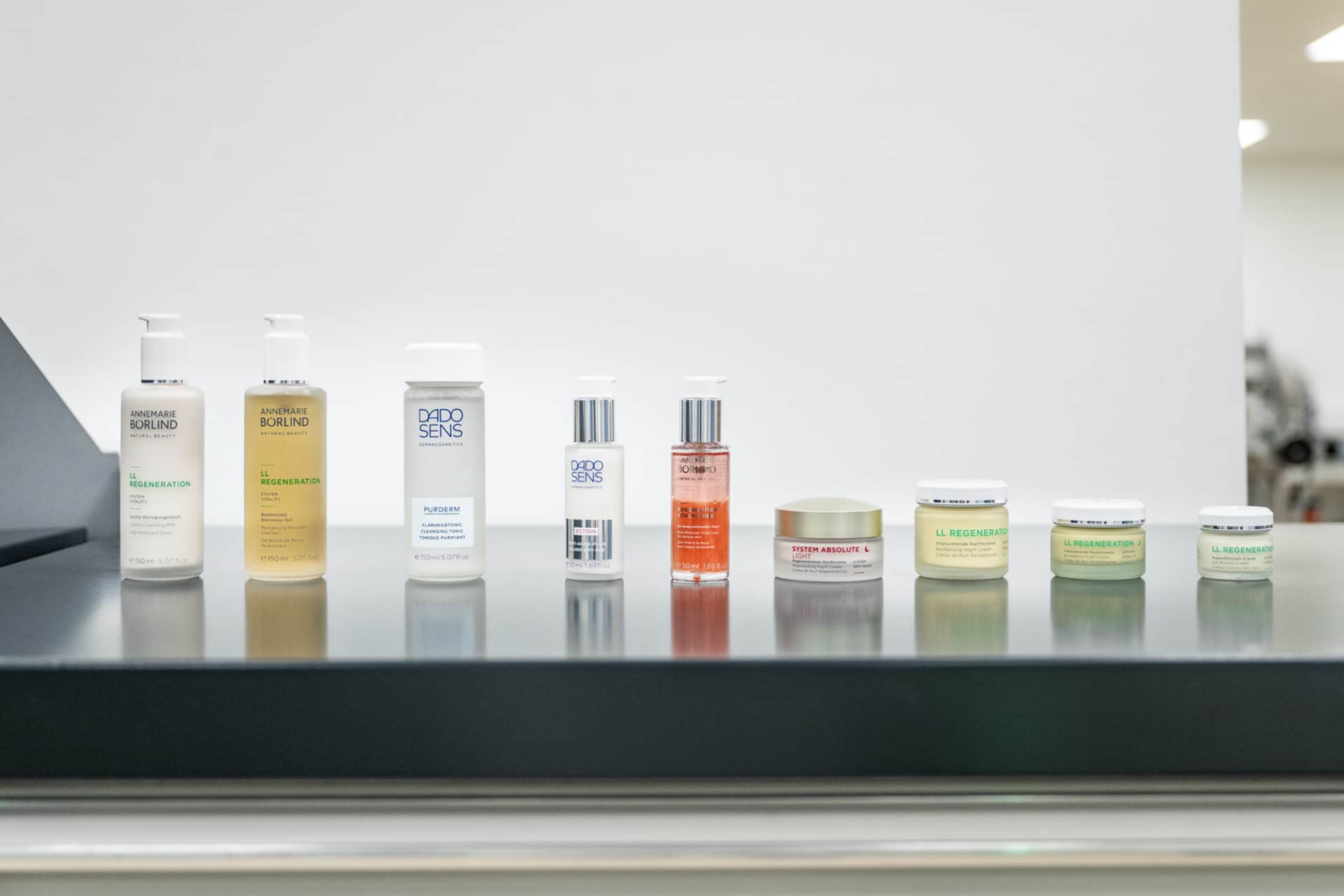
Pump dispensers, bottles and jars in various sizes roll off the production line in Calw.
Pump dispensers, bottles and jars in various sizes roll off the production line in Calw.

From the initial spark to the final decision

It is no coincidence that the first contact with Schubert was made in 2017. It is equally clear that, to implement such an important project, finding a partner who shared the same values of quality, sustainability and collaborative partnership would be essential. During a visit to Crailsheim, attended not only by Michael Lindner, the son of the company’s founder, but also by his children Alicia and Nicolas, it soon became obvious that they were on the same wavelength not only professionally but also personally. “The new line had to match our quality commitments – so the chemistry between everyone involved had to be just right,” explains co-CEO Nicolas Lindner. Any reservations that the global market leader in modular, intelligent TLM packaging systems might be a bit too big for Börlind quickly proved unfounded. In a very confined space, the task was to process a wide variety of creams, lotions and delicate two-phase products fully automatically – under the most stringent hygiene and quality standards.


Schubert drew up the specifications in 2019, and the order followed in 2022. The machine was delivered by the end of 2024 and installed and commissioned on site within only four weeks. This was followed by validation runs for each format – two weeks per item. Today, eight formats are running smoothly on the line, with three more in the pipeline. Looking ahead, the plant will be running a total of eleven format variants.

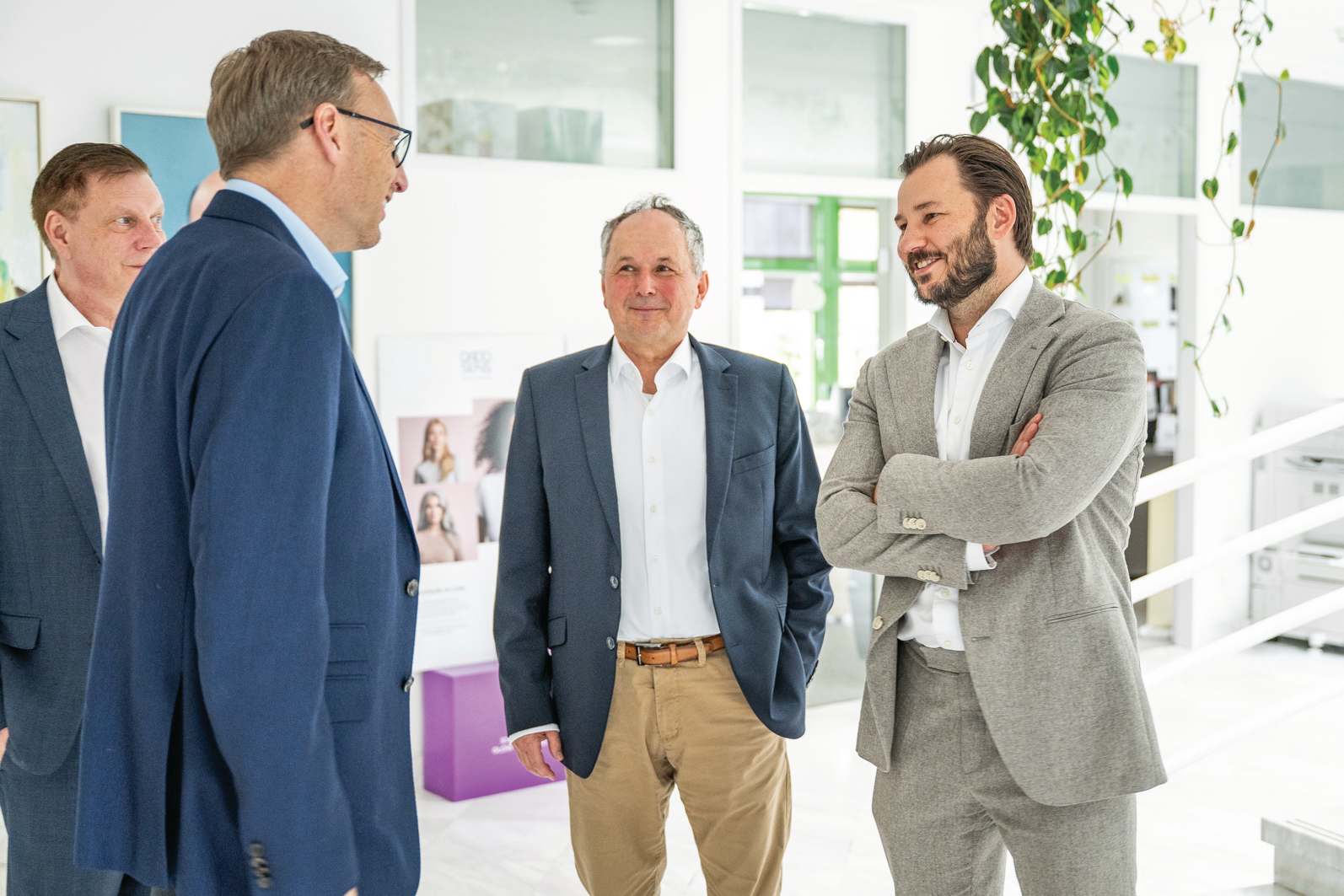
Visit to the Börlind headquarters in Calw

In April 2025, Marcel Kiessling and Ralf Schubert visited the Börlind headquarters in Calw. Werner Helgert and Nicolas Lindner welcomed the delegation from Crailsheim (from left to right).

Customised installation

The fact that the line could be successfully installed within this very tight timeframe was by no means a given, especially as the production premises in Calw presented the Schubert project team with very specific challenges. “We don’t have very large gates,” recalls Werner Helgert, Head of Production and Technology at Börlind. The passageways through the building, which was extended in 1983, offered very little room for manoeuvre. In some places, there were only a few centimetres of clearance between machine parts and door frames. Furthermore, Schubert had to take the building’s structural integrity into account, as the system was to be installed on a mezzanine floor – and it was quite heavy.


In addition to the physical requirements, the organisational constraints were also considerable: the tight schedule was compounded by the many departments involved and strict hygiene requirements. A special hygiene concept also ensured that Börlind could produce under cleanroom conditions at all times – a key prerequisite for the plant installation to take place alongside ongoing operations.

TLM Power Compact line

The Schubert TLM Power Compact line, which went into operation at the end of 2024, combines all process steps – from feeding through filling to sealing, capping and labelling – on an extremely compact footprint.
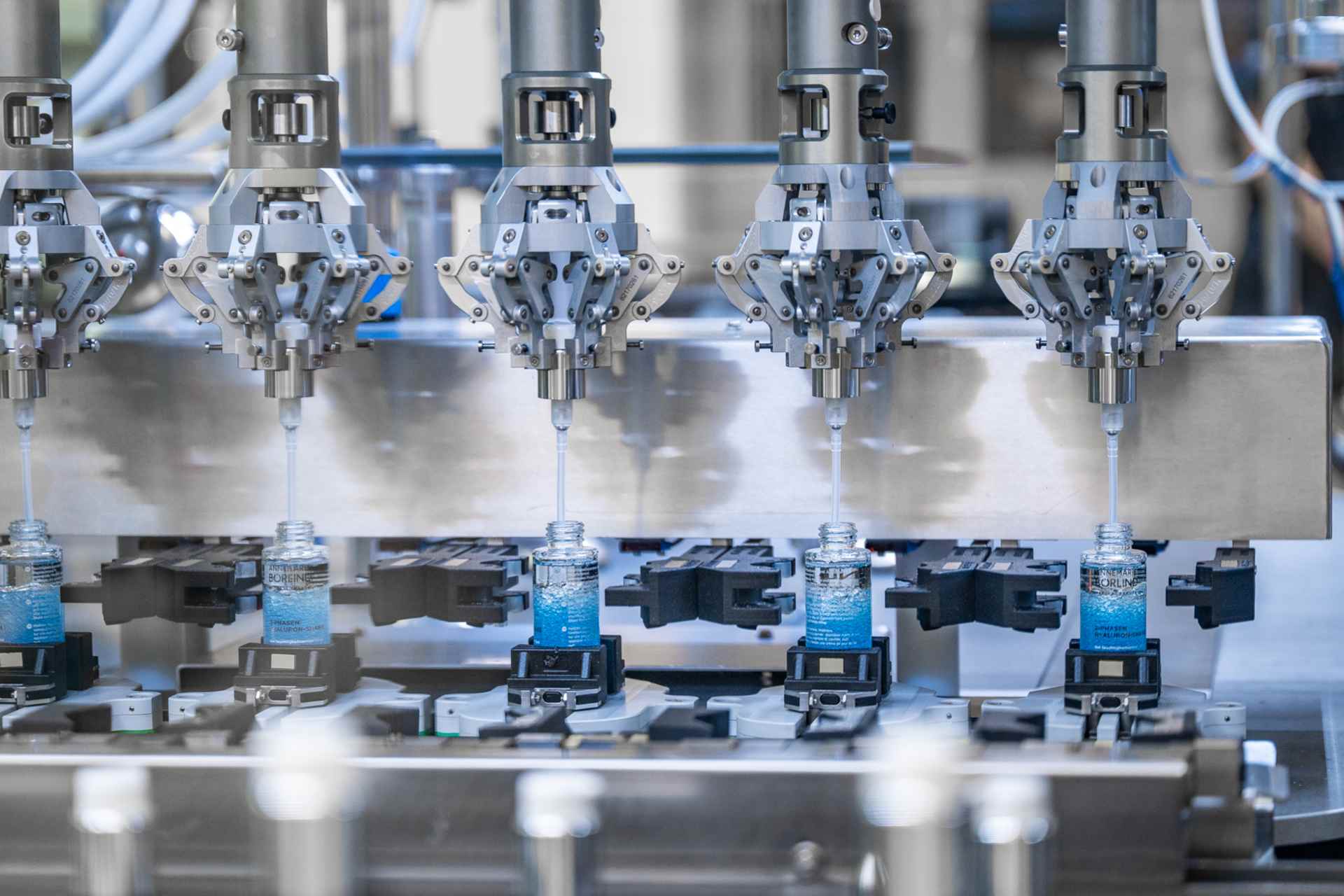
Technical versatility in the smallest of spaces

An essential factor for the project’s success was that the line had to be flexible enough in terms of filling technology, transport, quality assurance and peripherals to accommodate the desired range of formats and products – without ever compromising on precision or hygiene. The distinctive feature of the Schubert solution lies in its fully modular design, which enables the handling of bottles and jars on a single machine – a requirement for which there are virtually no comparable solutions on the market. For Schubert, this was an ideal opportunity to showcase the advantages of its own modular system: consistently aligned with customer requirements, flexible in implementation and, importantly, technically scalable.


“It was exactly the combination of format diversity, hygiene standards and limited space that made this project so challenging,” points out Daniel Traub, Global Key Account Manager at Schubert, involved in the project from the outset. “Challenging tasks like these demonstrate how important a modular, flexible concept is – and how much potential arises when a customer is willing to break new ground with us. In addition to the filling process, which is undoubtedly at the heart of the system, the Multi-Transport Unit (MTA) plays a key role by guiding all products safely through the individual stations. Three TOG cobots handle the feeding right at the start of the line. Using AI, they detect, grasp and place jars and bottles – a vital step in achieving the desired level of automation.

filling pumps

The filling pumps ensure that the sensitive formulations are handled with the utmost care. Integrated inline scales ensure that dosing is precisely controlled and the desired fill level is consistently achieved.

Pump technology guarantees quality

Among the many highlights are two independently operating filling stations, which allow Börlind to operate without interruption while one of them is being cleaned and sterilised. Both systems are rigorously designed in line with CIP and SIP criteria, enabling these processes to take place without dismantling the components. “This technical redundancy not only ensures high availability but also supports the strict requirements for process hygiene and product protection,” explains Werner Helgert.


Schubert designed the filling pumps to handle the sensitive formulations gently. Thanks to stress-sensitive pump technology, the structure of the formulations remains intact – whether highly viscous, thin-flowing or alcohol-based. The integrated in-line scale provides continuous feedback, enabling the system to precisely control dosing and consistently achieve the desired fill level. “This gives us a level of reproducibility that we could not achieve with our previous lines,” confirms Nicolas Lindner.

Oil-based product

In addition to cosmetics with various consistencies and viscosities, Börlind’s portfolio also includes two-phase products comprising an oil-based and a water-based component, as well as alcohol-based formulations.
Sealing and labeling with the maximum precision

Another highlight is a sealing system for glass jars, which Schubert used here for the first time. After conventional hot or induction sealing methods proved unimpressive, the technology developed by the watttron start-up in Freital, Saxony, provided the decisive breakthrough. Instead of preheating or melting the sealing film, the system draws it in without contact and applies it directly to the jar – quickly, precisely and with minimal energy input. The technology continuously monitors the amount of energy applied and automatically rejects faulty seals. For Börlind, the perfectly uniform “peel effect” was decisive, as it ensures a high-quality opening experience – without any film residue on the rim or the film itself. Previously used systems had been unable to meet these requisites.


Labelling also posed significant challenges. With round, transparent glass containers, even the slightest deviations stand out immediately: air bubbles, dust inclusions or visible overlaps are unacceptable for a premium brand. To consistently meet this requirement, Schubert developed a labeller that detects each container using a bottom-mounted camera, aligns it precisely and only then initiates the labelling process. The tolerance is no more than ±1 mm – a level otherwise only achieved by traditional rotary labelling systems. For oval bottles, the system additionally rotates the container synchronously into the process, ensuring the label can be applied tension-free and without distortion. Set-up times can therefore be reduced to just a few minutes. After changing the format parts, the labeller automatically adjusts all parameters – a significant contribution to the line’s overall efficiency.

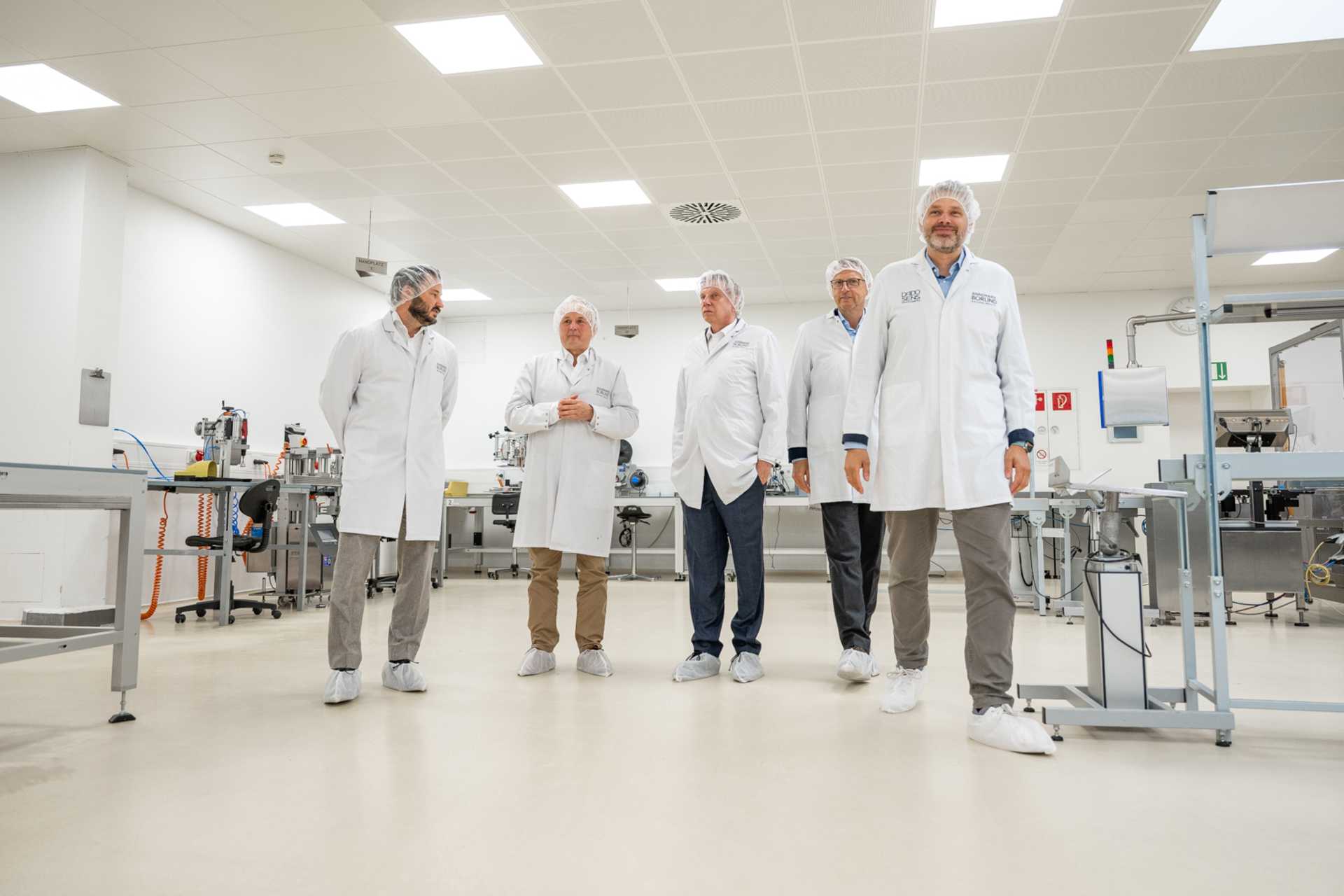
Tour of the production halls

During a tour of the production halls, Ralf Schubert (centre), Marcel Kiessling and Daniel Traub (both on the right) witnessed the new filling line operating faultlessly.

The visit to Calw – a moment of validation

Spring 2025: In Börlind’s strictly controlled production environment stands a small delegation from Crailsheim – Ralf Schubert, Marcel Kiessling and Daniel Traub. Together with Nicolas Lindner and Werner Helgert, they make their way along the new TLM line, observing the processes, exchanging views, stopping repeatedly as the cobots pick up bottles and jars with their precise movements or the inline scale confirms the fill level in a matter of milliseconds. The mood is attentive, focused, but also noticeably proud on both sides. “When you see how smoothly and reliably the processes now run, you feel vindicated in every decision,” says Lindner, as a freshly sealed jar moves silently through the line. Ralf Schubert nods in approval and sums up the moment: “It’s impressive to see how our technology comes into its own here in combination with Börlind’s quality standards. It is precisely for results such as these that every collective effort is worthwhile.”

Facts & figures

  • TLM Power Compact filling system
  • Up to 60 bottles/jars per minute
  • 11 formats
  • ≥ 95% machine efficiency
  • Low format part costs (3D-printed parts)
  • Fast changeover time < 15 min
  • Quick CIP thanks to hygienic design

More trends & news

Schubert North America to Showcase Flowpacker at IBIE 2025 Highlighting Flexibility, Efficiency, and Future-Ready Bakery Packaging

Schubert North America, a leader in modular, robot-based packaging solutions, is proud to announce its participation in IBIE 2025, taking place September 14–17 at the Las Vegas Convention Center. Visitors can find the Schubert team at Booth #201 in the West Hall, where the company will showcase its cutting-edge Flowpacker system—demonstrating how flexibility and precision are reshaping bakery packaging in North America.

More
Maschine

Limited Space, High Performance: How to Plan Compact Packaging Lines – Without Accessibility Trade-offs

How can a high-performance packaging line be realized in limited space within an existing building?


Through layout planning that considers building restrictions, process environment, and accessibility from the very start – and through modular machine technology that flexibly adapts to the available space.


This article covers:

- Which factors determine the real space requirements of a packaging line

- The central trade-off between compactness and accessibility

- Practical levers for using floor space intelligently

- Practical examples from existing production facilities

- How Schubert supports layout planning

More