


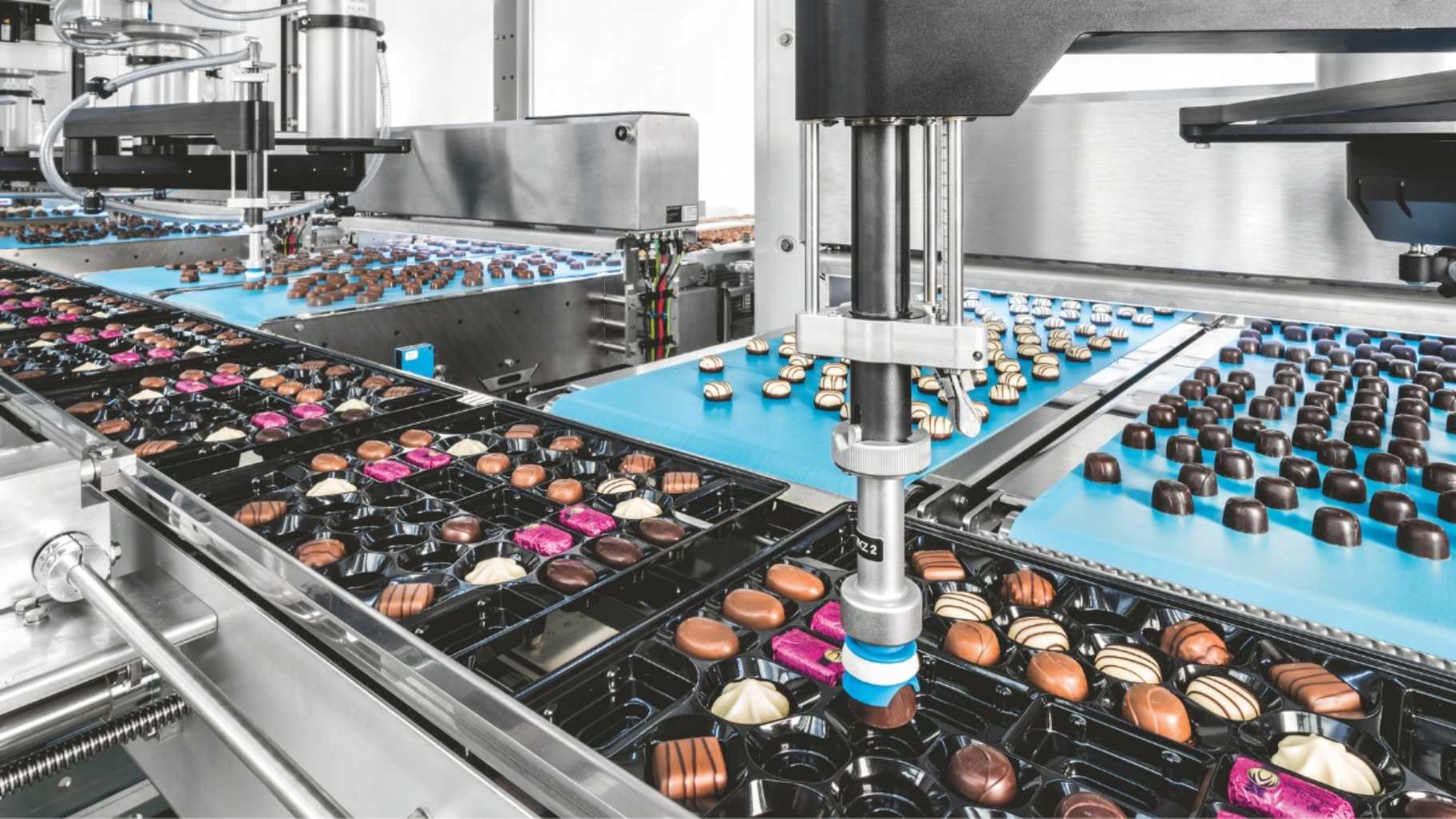
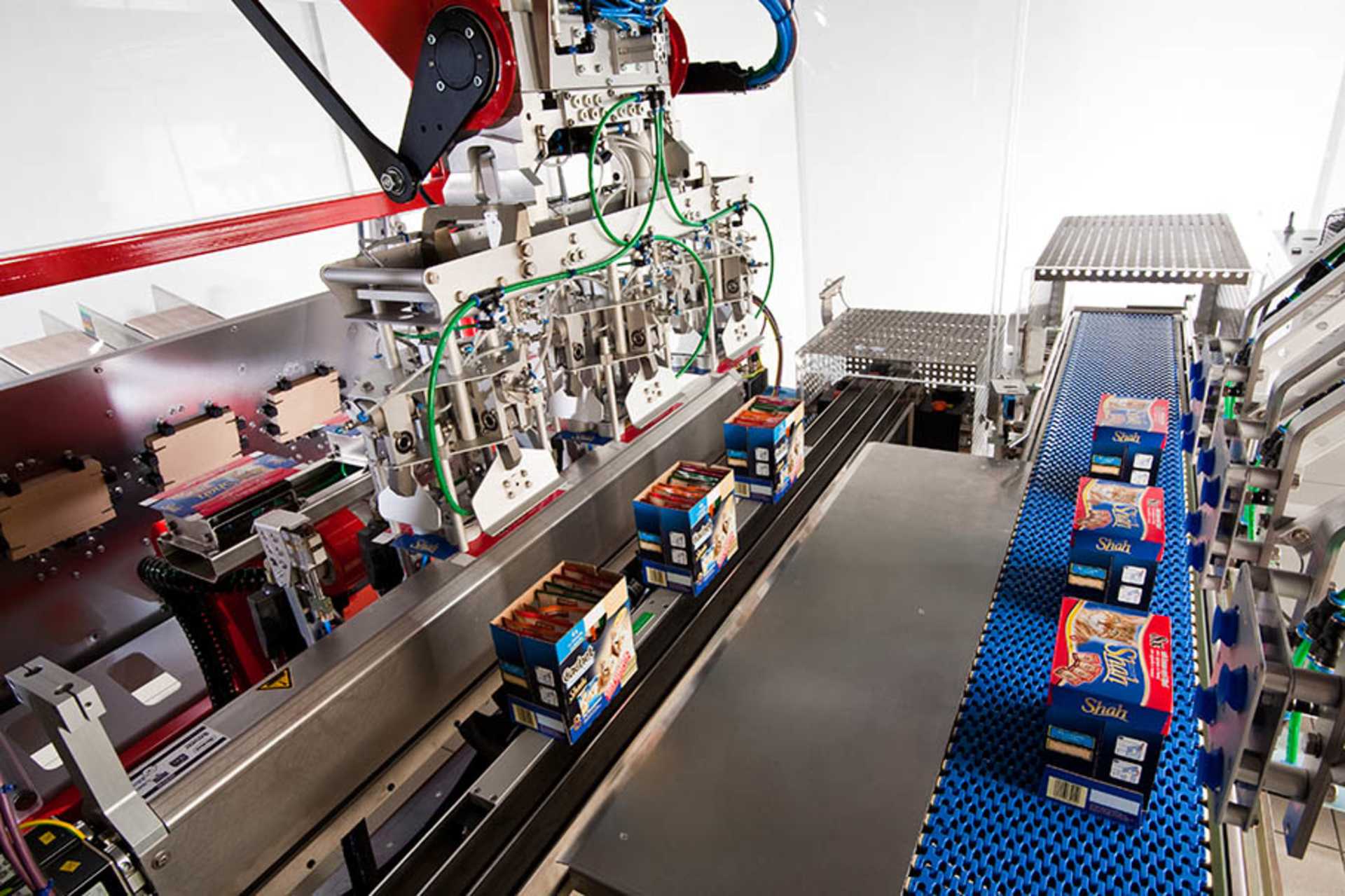
Fine pralines of various flavors in a tray. Different varieties of pet food pouches, combined in a single carton. An assortment of energy bars in one box. What all these products have in common: multiple varieties need to end up in a shared package in a defined mix ratio — reliably, quickly, and at a consistently high quality.
This is exactly what Schubert's Assortment Lines are designed for: automated packaging lines that combine image processing, pick-and-place robotics, and a flexible system architecture. At their core, three things matter most: the line must be able to handle the required mixed ratios, the products need to be fed in correctly, and every variety must be reliably identified.
Why Mixed Packs Are Becoming Increasingly Important
Consumers increasingly expect variety, and retailers are meeting that demand with packaging formats that deliver more choice—from family packs and mixed pet food assortments to praline boxes with multiple flavors.

Why Manual Processes Are Reaching Their Limits
Many manufacturers still assemble mixed packs manually or semi-manually. This works at manageable volumes — but as soon as variety, throughput, and cycle rates increase, the weaknesses become apparent:
- Precision declines: Anyone who spends eight hours sorting pralines into tight cavities or layering stand-up pouches into cartons will eventually make mistakes. The result: complaints and waste.
- Staff availability becomes a bottleneck: Seasonal peaks require additional personnel at short notice. At the same time, labor shortages and high turnover make it harder to fill positions. Recruiting, onboarding, and overtime drive up costs. More and more manufacturers are switching to automated packaging — simply because there are no longer enough staff available for these tasks.
- Quality fluctuates: Different experience levels within the team lead to inconsistent results. Retail partners with strict quality standards will not accept this in the long run.
- Scaling is nearly impossible: New mix variants or additional retail formats cannot simply be handled by adding more hands on the line.
An often-overlooked benefit of automation: employees who previously handled monotonous sorting and packing tasks can be redeployed to higher-value activities, such as quality assurance, line monitoring, or process optimization.
How an Assortment Line Works
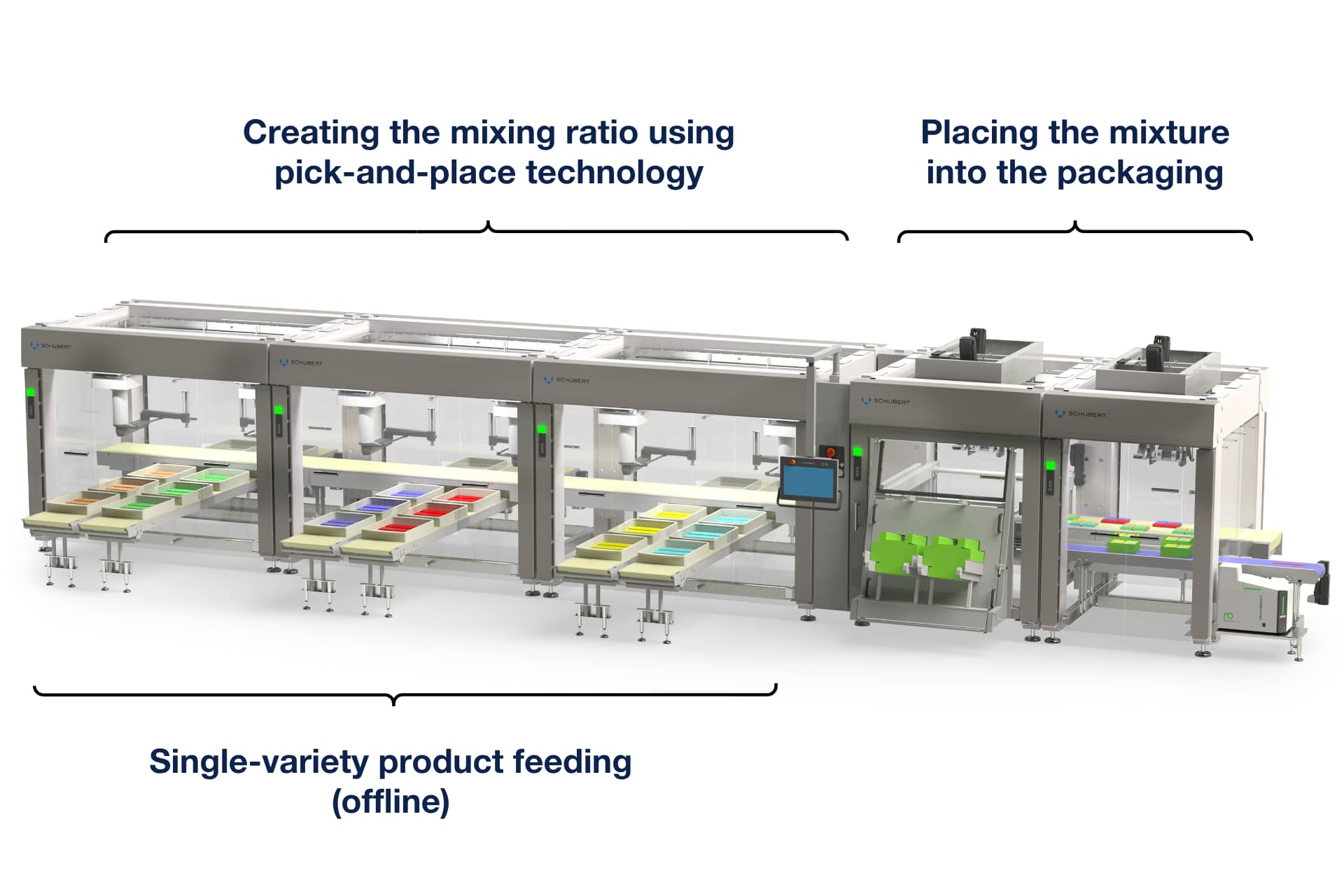
An Assortment Line is an automated packaging line that combines different product varieties in a defined mix ratio into a shared package. To achieve this, several functional modules work together as a coordinated system:


Ensuring Flexibility
Mixed packs thrive on variety. That's why the line must be able to keep pace with changing requirements:
- 3D printing system (Partbox): New format parts and robot tools can be printed on-site within hours — instead of waiting weeks for conventionally manufactured parts. This shortens changeover times and reduces downtime.
- Modular machine design: New mix ratios or packaging formats can be easily implemented or added later, thanks to our modular machine architecture.
- Easy operation: The HMI — the operator interface of the line — allows a new packaging program to be selected or a short-notice change to the pack pattern to be made at any time. This makes switching between mix variants fast and straightforward.
- Scalability across sites: Thanks to the modular design and standardized system components, proven line concepts can be transferred to additional lines or sites — without starting from scratch each time. This reduces engineering effort for follow-up projects and ensures consistent standards across the entire machine fleet.
Product Infeed: How Do the Products Reach the Line?
One aspect that is frequently underestimated when planning mixed-pack lines is product infeed. The different varieties are typically produced by variety, stored temporarily, and only then transported to the packaging machine. The individual varieties are fed to the machine in an orderly fashion via separate conveyors.
Reducing Investment Risk
Anyone considering the automation of mixed packs is facing a substantial investment decision. That's why we offer concrete ways to keep the risk manageable:
- Technology center and proof of concept: In our technology center in Crailsheim, we conduct tooling tests with your actual products — before the investment decision is made.
- Built-in expandability: We already factor in future formats and applications during line planning, so the line can grow with your business.
- Machine life cycle: Our machines are designed for a service life of 20 years and more. Throughout this entire period, we ensure spare parts availability — so your investment is secured for the long term.
- Support through to full production: Commissioning doesn't end with the push of a button. We support the ramp-up on-site, train your operators and maintenance team, and make sure your organization can manage the line independently after handover — from daily operation to fault diagnosis.
Checklist: 12 Questions to Ask Before Automating Mixed Packs
How many product varieties do I want to pack into a single mixed pack?
How do my products reach the packaging line? Online, directly from the upstream process — or offline and sorted by variety, e.g. from an intermediate storage area?
For offline infeed: Do the products need to be unloaded from specific containers, e.g. WIP trays, baking sheets, or E2 crates? Is product singulation required?
For online infeed: Do I need buffer or recirculation options in case one variety's manufacturing process comes to a standstill?
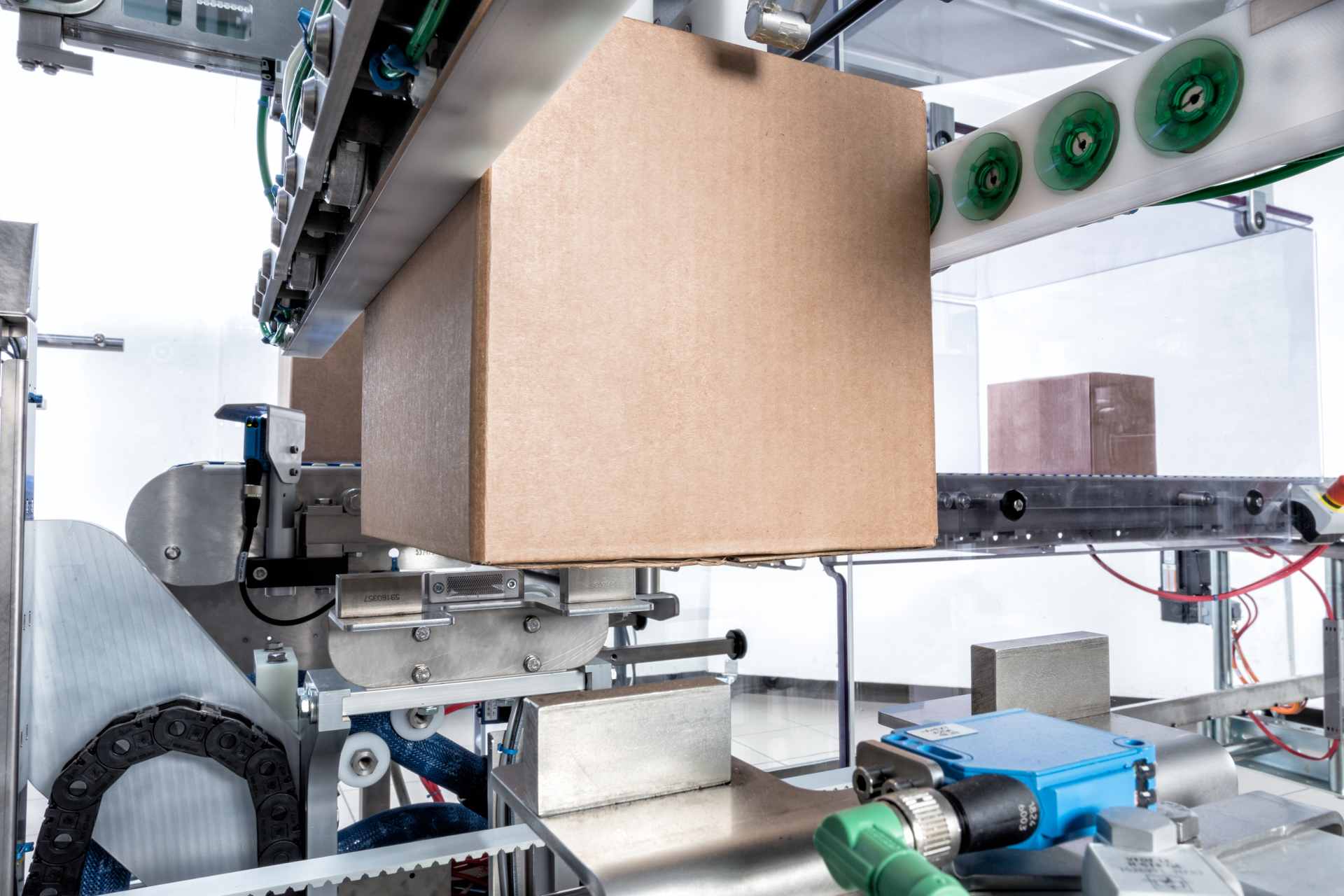
What types of packaging should the line handle — e.g. retail-ready packs, shelf-ready display cartons, or e-commerce-capable packaging?
What special requirements do I have for e-commerce packaging — for example regarding stability, material thickness, or drop tests?
What package sizes do I want to cover?
Do I need special functions in my line, such as product turning or aligning the display side?
What are the mix ratios within the packages?
What pack pattern applies? Single variety per layer or mixed varieties per layer?
How should the different varieties be identified — via the infeed lane or using scanner and camera technology?
How much space do I have available in my production facility? (Also read our blog article on planning compact packaging lines)
Outlook: Why Flexibility Is Becoming a Must
The conditions facing food and pet food manufacturers will continue to tighten shorter product life cycles, more variants at smaller batch sizes, rising quality expectations from retailers and consumers, and a labor shortage that won't resolve itself. Manufacturers who still assemble mixed packs predominantly by hand will not be able to meet these demands reliably over time.
What matters is thinking about the right solution not just technologically, but strategically: Which mix ratios and pack patterns are viable in the market? Which packaging formats — shelf-ready, e-commerce, traditional boxes will be needed in the future? These questions should be answered long before a line is built.
With our Assortment Lines, you lay the foundation for turning product variety from a burden into a competitive advantage: with predictable staffing requirements, consistent quality, and the ability to respond quickly to new market demands.
Want to find out how your mixed packs can be automated? In a no-obligation initial consultation, we analyze your product portfolio, your variants, and your volumes together — and show you options ranging from partial automation to a complete solution.

